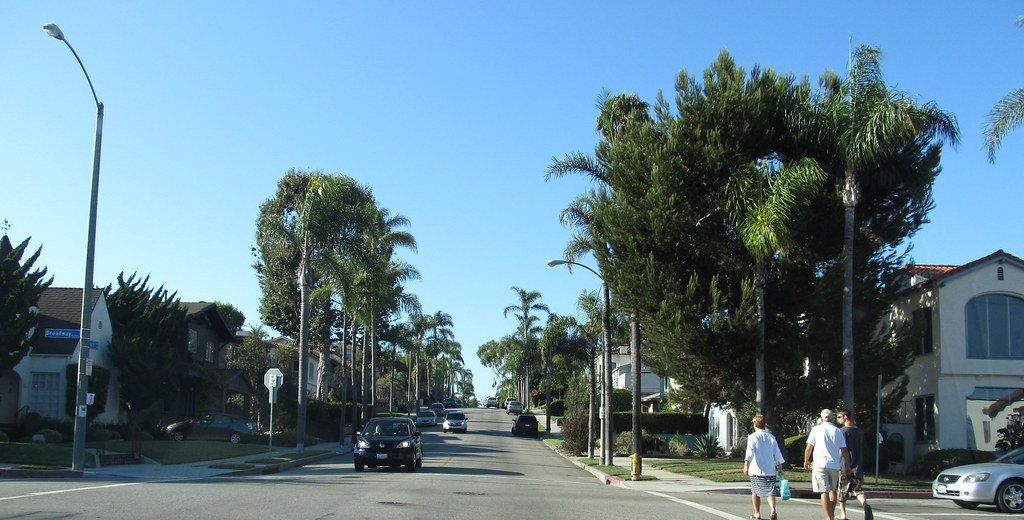
This is a city on a peninsula, planned long ago and lived in by owners. Red tile is part of the picture many people have of it. The picture is an impression, and this page sticks to the data we hold, with one honest gap noted below.
Housing
The Census Bureau's 2020 to 2024 estimates count about 5,370 housing units. The median year built is 1964. About 39 percent of units were built before 1960 and about 82 percent before 1980. Owners occupy about 90 percent. The median home value is over $2 million.
A stock with four fifths of its units older than 1980 means many roofs have already been replaced once or twice. Clay barrel tile and concrete lookalikes may be common in the Spanish and Mediterranean houses of Southern California. The data cannot confirm which houses in the city have them.
Fire map
CAL FIRE's current map covers about 53 percent of the city's area with some hazard level and about 36 percent with the very high level, roughly 1,085 acres. The city is therefore split. Some streets are mapped and others are not.
Which side of the line a given house sits on is a matter for the city. A mapped zone may change what a permit will accept. A house outside the zone is still subject to the ordinary building code.
Rain and zone
The city lies in climate zone 6. The nearest NOAA station, the Palos Verdes station about 2 kilometers off, records 12.32 inches of rain a year for 1991 to 2020.
The Cool Roof Rating Council's 2025 summary of alteration values for multifamily roofs lists climate zones 4 and 8 through 15, and so does not list zone 6. For single-family roofs it points to Sections 150.1(c)11 and 150.2(b)1I of the 2025 Energy Code. Ask the city whether your roof needs a rated label.
The review question
The building department is the City of Palos Verdes Estates. This page says nothing about the city's re-roof steps or fees.
Ask the city whether changing a roof material, tile profile or color needs design review before you order anything.
Reading the data with care
The housing and fire figures are estimates and mapped shares, not facts about a single address. A city split between mapped and unmapped areas can have two neighbors in different positions. A median year of 1964 says that the stock is mature, not that your roof is. The age of your own underlayment is the number that settles a budget, and a roofer who lifts a few tiles can read it in an afternoon.
Cost context
Fixr's August 29, 2025 guide gives $11,046 to $22,266 for a clay tile roof across the country and a replacement average of $20,055. If the existing tile can be reused, its January 31, 2025 underlayment guide gives $3 to $5 per sq ft for lifting the tile, replacing the underlayment and setting the tile back, and it allows for about 10 percent breakage. Where the tile must match an existing profile, finding matching pieces may add effort.
The full cost guide gives each range with its date.
Before you hire
- Ask the city what the roofing permit needs and whether design review applies.
- Ask whether the color and profile must match.
- Ask the bidder for a written breakage allowance.
- Look up the license at the Contractors State License Board.
This publication is not a contractor and does not bid work.