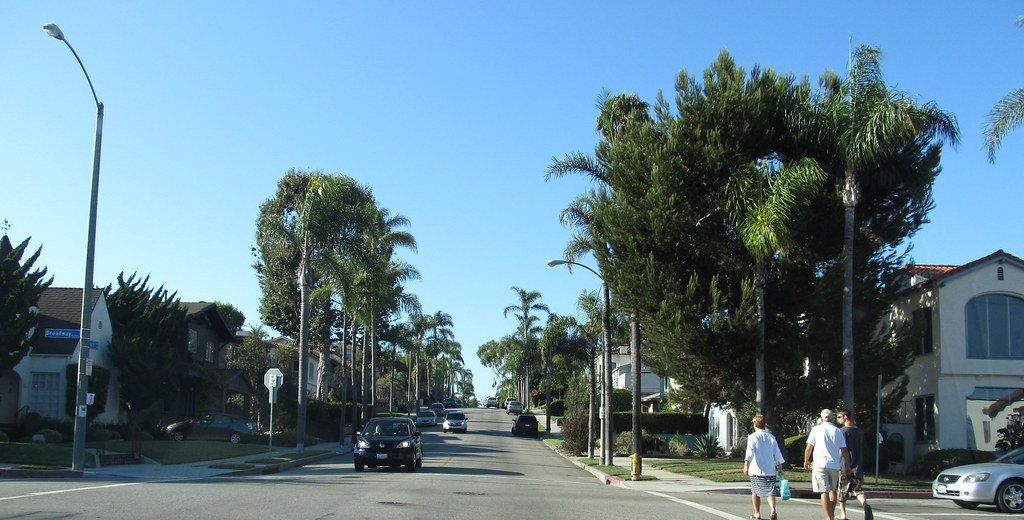
Manhattan Beach is a coastal city with a large owner base. It has no land in a mapped fire hazard zone. That changes the character of its tile roof questions: less about wildfire rules, more about age, climate and the weight of the roof on its frame.
Housing
Census Bureau estimates for 2020 to 2024 count about 15,281 housing units. The median year built is 1970. About 37 percent were built before 1960, and about 59 percent before 1980. Owners occupy about 65 percent. The median home value is over $2 million.
A 1970 median suggests that a large part of the housing is now over half a century old. A good share of it was built in a period when tile roofs, including concrete tile in Mediterranean and Spanish profiles, may be found on Southern California houses. Many may have been re-roofed since. A newer, larger house on a rebuilt lot may be a different matter entirely, and the data cannot sort one from another.
No mapped fire zone
CAL FIRE's current map shows no share of the city, at any level, in a Fire Hazard Severity Zone. The CAL FIRE share is 0 percent for both the very high zone and any zone. This is a plain fact of the map and not a promise about any single address. Check with the city for your lot.
Because the fire map does not bind, the roof is shaped by other things: the building code, the energy code, the weight of the covering and the owner's taste.
Climate
The city sits in California climate zone 6. The nearest NOAA station, in Redondo Beach about 6 kilometers off, records 13.76 inches of rain per year for 1991 to 2020. Rainfall is modest.
Zone 6 is not among the zones in the Cool Roof Rating Council's 2025 summary of alteration values for multifamily roofs, which lists zones 4 and 8 through 15. For single-family houses, the same summary points to Sections 150.1(c)11 and 150.2(b)1I of the code. Whether a given re-roof needs a cool roof label in zone 6 is a question to put to the city.
Weight and structure
Tile is heavy. RoofingCalc, in a July 30, 2023 guide, gives 575 to 1,100 pounds per square for concrete tile and says most codes call for frame upgrades above about 600. Where a house has a light roof today, a move to tile is a structural question. Fixr's August 29, 2025 clay guide says reinforcing a roof can cost several thousand dollars, and sometimes more than $10,000.
Price context
For clay, Fixr gives $11,046 to $22,266 nationally and an average of $20,055 for replacement. For reusing sound tile, Fixr's January 31, 2025 underlayment guide gives $3 to $5 per sq ft. A coastal house also brings access questions, like tight lots and street parking, that bidders may price.
The cost guide sets out the ranges with dates.
Permits
This page makes no statement about the city's re-roof process, fees or documents. Call the Building Division and ask whether a re-roof needs a permit, what plans are required and how inspections are scheduled. Also ask whether your address has any coastal or design review that touches the roof.
Reading the data with care
The figures here are Census estimates summed from tracts, and a zero on the fire map is what the map shows today. Maps are revised. The housing numbers describe the city as a whole, and individual blocks may differ a great deal, with older cottages beside new construction. For a tile roof, the fact that matters most is the age of the underlayment on your own house, and that is found by looking, not by reading a table.
Checklist
- Ask the building division what the roofing permit requires.
- Ask for the tile, underlayment and flashing in the bid.
- Ask whether the framing has been reviewed for tile weight.
- Look up the roofer at the Contractors State License Board.
This is an information publication, not a contractor.
Sources
- U.S. Census Bureau, ACS 2020-2024 5-year estimates, summed by tract
- CAL FIRE, Fire Hazard Severity Zones
- NOAA 1991-2020 climate normals
- Fixr, Clay Tile Roof Cost (updated August 29, 2025)
- Fixr, Roof Underlayment Replacement Cost (updated January 31, 2025)
- RoofingCalc, Concrete Tile Roof Cost (updated July 30, 2023)